
Modern student housing standards, especially those for college student housing, have fundamentally redefined traditional dormitories. Today, the goal is to build a living-learning environment that fosters community, productivity, and wellness, but aging university student housing often falls short of these expectations.
Under this situation, decision-makers face a pivotal choice: proceed with a strategic dorm renovation or pursue a complete rebuild. The key is to balance budget, timing, and environmental impact. Here, we are going to give a comprehensive guide!
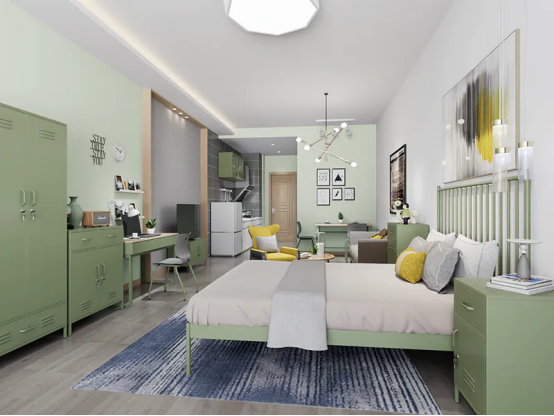
When Dorm Renovation Is the Better Choice
For many institutions, the most sustainable building is the one that already exists. Dorm renovation is frequently the preferred path when specific criteria align to make preservation more viable than demolition.
- Sound Building Structure: If the fundamental “bones” of a building—including the foundation, load-bearing walls, and envelope—remain healthy and stable, renovation becomes a high-value strategy.
- Prime Campus or Transit Location: Older housing is often situated in the heart of campus or near major transit hubs. Renovating allows universities to maximize these premium land resources without the logistical nightmare of new zoning or neighborhood disruption.
- Limited Upgrade Budget: Renovations are inherently more economical, typically costing only 70% to 75% of a full rebuild. This makes it an ideal choice for institutions that need to modernize without exhausting capital reserves.
- Minimal Disruption to Occupancy: Time is revenue. Renovation projects are often faster and can be phased or even completed during a single summer break, ensuring the building is ready for students by the fall semester.
Benefits of Dorm Renovation:
- Faster Project Completion: By retaining the existing shell and structure, the construction timeline is significantly compressed compared to ground-up projects.
- Lower Overall Costs: Beyond construction savings, renovation avoids high demolition fees—which can eat up 10% of a rebuild budget—and reduces “soft cost” escalations.
- Preservation of Existing Character: Renovation allows campuses to retain historic architectural details and unique cultural heritage that new builds simply cannot replicate.
When Rebuilding Makes More Sense
While renovation has its perks, there are times when starting fresh is the only way to meet long-term institutional goals. Rebuilding university student housing is often the logical choice under the following conditions:
- Structural Damage or Outdated Systems: When mechanical, electrical, and plumbing (MEP) systems have reached their life limit, or if the building has major structural issues like severe mold or water damage, the cost of retrofitting often exceeds the cost of a new build.
- Long-term Development Goals: If the existing footprint cannot support higher density or the university’s aggressive energy efficiency and carbon-neutrality targets, a rebuild is necessary to future-proof the campus.
Advantages of Dorm Rebuilding:
- Full Design Flexibility: New construction allows architects to move away from outdated layouts and create spaces that prioritize privacy, mental health, and modern social dynamics from the ground up.
- Integrated Sustainable Architecture: It is far easier to integrate high-performance building envelopes, smart energy grids, and eco-friendly materials into a new structure, leading to significantly lower long-term operational costs.
Furniture and Interior Planning Strategy
Regardless of whether you renovate or rebuild, the interior strategy determines the daily quality of life for residents. A successful housing project relies on a furniture plan that is as adaptable as the students themselves.
- Modular and Flexible Furniture Systems
These systems empower students to personalize layouts while offering decision-makers high ROI and future-proof adaptability. Standardized components allow for quick reconfigurations and cost-effective repairs as campus needs evolve.
Picture shown: Dormitory Loft Bed with Desk
- Multifunctional Storage Solutions
Space is a premium. Integrated storage—such as beds with built-in drawers or multifunctional ottomans—maximizes every square inch. This also reduces visual clutter, which has a documented positive impact on student stress levels.
- Ergonomic Study and Living Furniture
Students spend hours at their desks. Prioritizing ergonomics through height-adjustable desks and chairs that support natural posture is no longer a luxury; it is a standard for health and wellness.
- Durability and Safety Standards
Student housing is a high-traffic environment. Furniture must be constructed from wear-resistant materials like hardwoods and high-grade metal alloys. Furthermore, all pieces must strictly adhere to fire safety ratings and ADA accessibility standards to ensure an inclusive environment.
- Consistent Design Across Units
Establishing a unified design language simplifies maintenance. When parts and materials are consistent across units, facility managers can streamline repairs and replacements, reducing the total cost of ownership.
Partnering with Experts: Who Can You Trust?
Navigating the complexities of student housing requires a partner who understands the intersection of durability and aesthetics. Topohut stands out as a “one-step” solution provider with over 30 years of experience and a track record of serving 51,520+ clients across 68 countries.
Whether managing a targeted dorm renovation or a large-scale international rebuild, Topohut offers comprehensive support—from free 3D design and one-day sample making to diverse global delivery. Their 79,100-square-meter facility produces everything from modular loft beds to communal lounge seating, all certified by ISO, SGS, TUV, and other international certifications.
Topohut’s expertise spans the entire educational spectrum, having successfully completed projects for:
- Higher Education: The University of Queensland, Sun Yat-sen University, and NIMS University.
- International & Private Schools: ISS International School, New Zealand School Jakarta, Lyceum International School, and the International School of Tanganyika.
By choosing Topohut, you gain a reliable partner capable of delivering fully customizable campus solutions that meet international safety standards while maximizing the long-term ROI of the facility.
Conclusion
The choice between renovating and rebuilding the dormitory depends on the structural assets, budget, and long-term vision. While renovation offers speed and cost-effectiveness, rebuilding provides the ultimate canvas for sustainability and modern design.
By integrating a smart furniture strategy with a trusted partner like Topohut, you can ensure that your student housing remains a top choice for the next generation of learners!
