
As winter approaches and temperatures gradually drop, cold weather presents significant challenges to the efficiency of all vehicles, particularly affecting the range and charging efficiency of electric cars.
In frigid conditions, reduced battery activity shortens driving range and extends the time required for charging.
This raises a critical question: How to charge electric cars in cold weather effectively to ensure reliability and longevity? Read on for the influence of cold weather and efficient charging methods.
How Does Cold Weather Affect Electric Cars?
To develop effective charging strategies, it’s crucial to understand the core challenges cold weather imposes on EV batteries and systems.
1. Slowed Chemical Reactions
The EV batteries used in most modern EVs rely on the movement of ions through a liquid electrolyte. When temperatures drop, the viscosity of this electrolyte increases. This “thickening” makes it harder for lithium ions to move between the anode and the cathode. It directly reduces the battery’s ability to deliver and accept energy.
2. Reduced Driving Range
It is common for EV cars in winter to see a driving range reduction of 20% to 40%. This loss occurs for two primary reasons:
- Battery Inefficiency: As mentioned, the battery cannot release energy as efficiently in the cold.
- Heating Loads: Unlike internal combustion engines that use “waste heat” to warm the cabin, EVs in cold weather must use battery energy to power heaters or heat pumps, diverting power away from the drivetrain.
3. Slower Charging Speeds
When charging EVs in cold weather, the Battery Management System (BMS) often limits the input power. This is a safety mechanism to prevent “lithium plating,” a phenomenon where lithium ions coat the surface of the anode instead of intercalating into it, potentially causing permanent damage.
4. Risk of Frozen Charging Ports
Practical environmental factors also play a role. Moisture from snow or freezing rain can enter the charging port or the locking mechanism of the connector.
If these components freeze, it can be physically impossible to plug in or unplug the vehicle without carefully defrosting the area first.
How to Charge Electric Cars in Cold Weather?
Mitigating these effects requires proactive strategies. Here are key operational best practices for charging a car battery in cold weather effectively:
1. Charge as Needed
Maintaining a state of charge (SOC) between 20% and 80% is critical for EV cars in winter.
Below 20%, the battery may not have enough energy to power its own internal thermal management system, leaving it vulnerable to deep-freeze conditions. Conversely, charging to 100% in extreme cold can put unnecessary stress on the cells as the internal resistance peaks.
2. Prioritize Slow Charging
While DC fast charging is convenient, charging a car battery in cold weather is often safer and more consistent using AC chargers.
Slow charging generates a gentle, steady heat that helps keep the battery chemistry active without the aggressive current that triggers BMS limits. For overnight sessions, an AC charger is the ideal tool for winter reliability.
3. Utilize Indoor or Underground Parking
Whenever possible, park and charge in a temperature-controlled environment. Underground parking lots naturally stay warmer than the outside air.
By keeping the vehicle in a shielded area, you reduce the energy the BMS must spend to maintain the battery’s “hibernation” temperature, ensuring a faster start to the EV charging session.
4. Keep the Charging Gun and Vehicle Port Dry
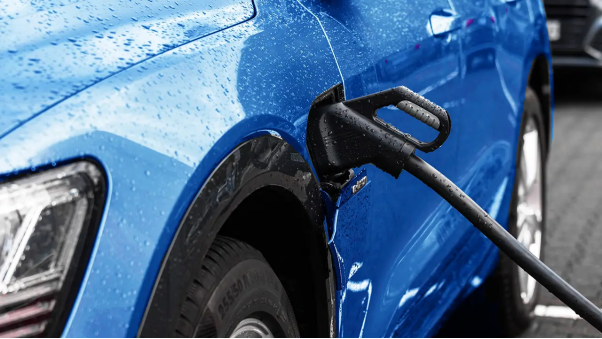
Moisture is the enemy of high-voltage connections. When using an electric car charger outside, always check that the charging gun and the vehicle port are free of snow and ice.
If ice has formed, use a warm cloth or a specialized de-icer; never force a frozen connector. Using a charger with a high IP (Ingress Protection) rating is non-negotiable for outdoor winter installations.
5. Pre-heat the Vehicle
Preconditioning is an effective way to maximize efficiency for EVs in cold weather. By using a mobile app to start the vehicle’s climate control while it is still plugged into a charger, the energy required to warm the battery and cabin comes directly from the grid, not the car’s battery. This leaves the driver with a full range and a battery already at an optimal operating temperature.
Whenever possible, charging electric cars in cold weather immediately after a drive while the battery is still warm, as it is more efficient than charging a cold-soaked battery.
6. Plan Ahead for Longer Journeys
For long-distance journeys, winter requires revised route planning. Account for the fact that charging EVs in cold weather will take longer.
Using the vehicle’s onboard navigation to find a charging station in advance is often beneficial. At this time, your EV is still warm to ensure peak performance upon arrival and avoid energy waste.
Best EV Charger for Cold Weather Charging
For resellers, distributors, CPOs, or drivers, choosing the right hardware is paramount for reliable winter operation. EVB offers a suite of charging solutions specifically designed to withstand extreme environments.
EVB chargers are designed with a wide operating temperature range, typically from -30°C to +50°C for AC models and up to +55°C for commercial DC stations.
| Feature | Specification (EVB AC/DC Chargers) | Benefit for Cold Weather |
| Operating Temperature | -30°C to +55°C (Varies by models) | Ensures functionality in cold conditions. |
| IP rating | IP55 / IP65 | High resistance to snow, sleet, and freezing rain. |
| Housing Material | V0 fire-rated material | Ensures structural integrity. |
| Safety Functions | Over-temp, leakage, lightning protection, etc | Maintains safety even when grid stability fluctuates in winter. |
| Communication | OCPP 1.6J | Allows remote preconditioning and monitoring. |
EVB offers various types of charging stations. Inform them of your requirements so they can provide you with a customized solution.
FAQs
1. Should I charge my EV to 100% in winter?
Generally, it is better to stick to the 80% limit unless you are planning a long trip immediately after charging. In the winter, regenerative braking is often limited when the battery is near 100% and cold, which can affect driving feel and efficiency.
Staying between 20% and 80% provides the best balance of safety and performance for charging a car battery in cold weather.
2. If the range drops significantly in winter, does it mean the battery is damaged?
No, this is a temporary performance drop, not permanent degradation. The “missing” range is simply locked away by the increased internal resistance and the energy diverted to heating. Once the weather warms up, your EV will return to its standard range.
Conclusion
Understanding how to charge electric cars in cold weather is essential for maintaining the EV efficiency and lifespan. By following best practices like preconditioning and using high-quality infrastructure, the challenges of winter become manageable.
For resellers, distributors, and CPOs, providing reliable equipment is key. EVB Charger offers superior low-temperature resilience and industry-leading protection ratings. Contact them now for detailed information!
