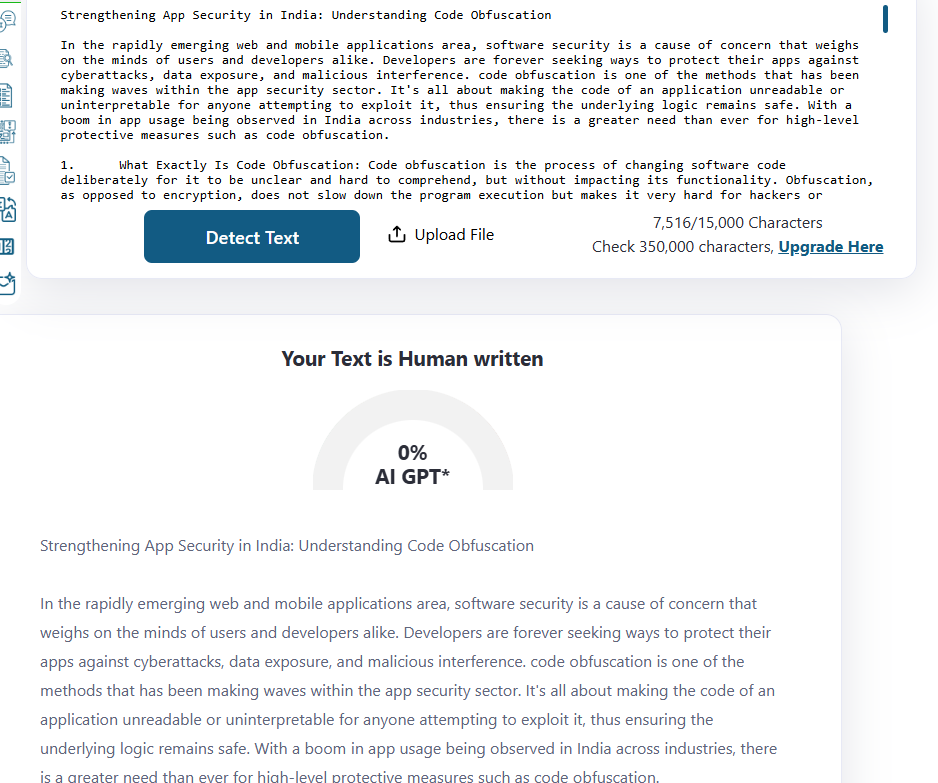
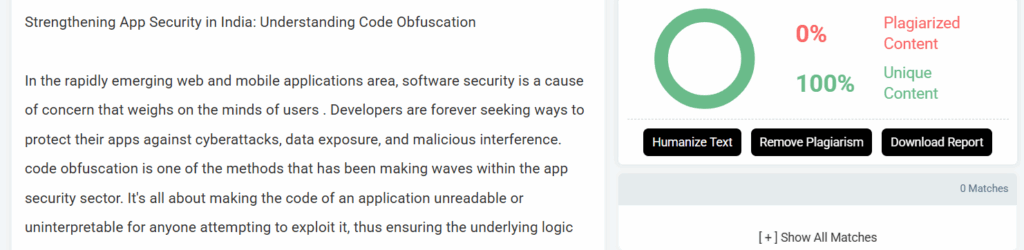
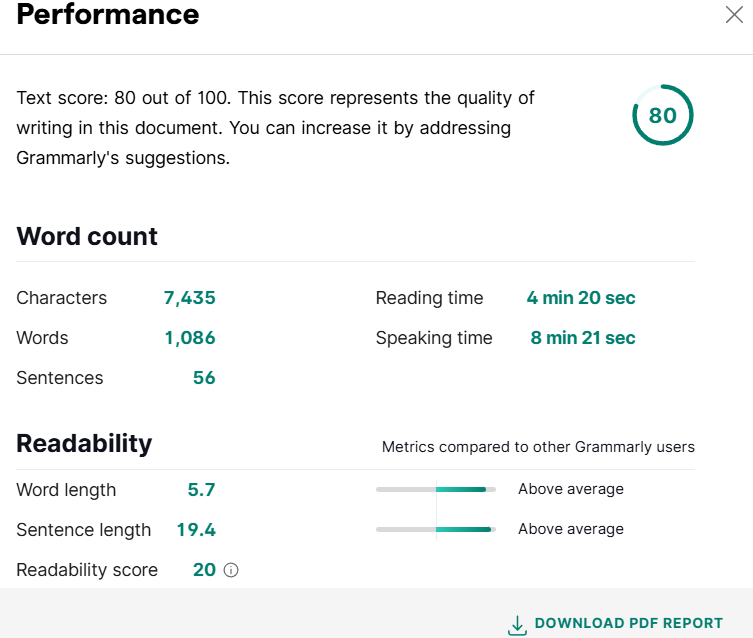
In the rapidly emerging web and mobile applications area, software security is a cause of concern that weighs on the minds of users and developers alike. Developers are forever seeking ways to protect their apps against cyberattacks, data exposure, and malicious interference. code obfuscation is one of the methods that has been making waves within the app security sector. It’s all about making the code of an application unreadable or uninterpretable for anyone attempting to exploit it, thus ensuring the underlying logic remains safe. With a boom in app usage being observed in India across industries, there is a greater need than ever for high-level protective measures such as code obfuscation.
- What Exactly Is Code Obfuscation: Code obfuscation is the process of changing software code deliberately for it to be unclear and hard to comprehend, but without impacting its functionality. Obfuscation, as opposed to encryption, does not slow down the program execution but makes it very hard for hackers or competitors to reverse engineer and replicate the logic. The method is most commonly implemented in web and mobile apps to protect sensitive information, intellectual code, and other essential elements from reverse engineering.
- Why Indian App Developers Need It: India is witnessing an enormous growth in app development across different sectors, from banking and e-commerce to education and healthcare. As growth is happening, apps are getting increasingly exposed to attacks. Code obfuscation shields the attack by protecting intellectual property and does not allow attackers to see the internal operations of an app. By obscuring the code, the developers are able to protect sensitive data such as login or payment details even if the attacker happens to view the application files.
- Property Protection: Most significantly, perhaps, protection of intellectual property is the application of obfuscation. Indian developers spend long hours building innovative software solutions. Without the protection of obfuscation, the app could be reverse-engineered by cybercriminals to steal the underlying innovation of the app’s primary function, depriving the developers of the advantage of a competitive boost. Obfuscation offers a protection that only protects the intended app user as the underlying innovation is secured.
- Mobile Application Security Enhanced: Mobile applications are the most at-risk because they typically reside on single devices that can be incredibly easily hacked. For a nation such as India, where mobile internet usage is common, apps protecting it from malware, unauthorized modification, and data theft are imperative. Code obfuscation is an act of defense whereby even if the app is dropped off a device, no one knows its inner logic. This reduces the risk of data theft as well as establishes trust amongst users.
- Ensuring Long-Term Security: Code obfuscation isn’t an incident, since it must be implemented on a continuous basis as part of continuous security planning. Since programs constantly get new features or patches, obfuscation must get updated to protect the new code. Continuous obfuscation and security patches ensure protection from continuously changing threats in India’s constantly changing digital landscape.
- Training Development Teams: A secure application starts with a well-educated development team. Educating Indian developers about the benefits and application of code obfuscation is important. If developers are aware, they can make coding for obfuscation easy and follow security best practice from the very beginning. This will lower the chances of introducing vulnerabilities an attacker can take advantage of.
- Enabling Compliance and Regulations: As the Indian government has imposed stricter regulations for the protection of data, security responsibility is now on the shoulders of app developers. Obfuscation of code allows this to be achieved by keeping sensitive information which is incorporated in applications. Although not a replacement for encryption or other security processes, it is utilized in addition to them to safeguard an integrated framework for application security according to the demands of the law.
- Financial Losses: Cyberattacks may bring financial loss for Indian companies in the form of theft of revenue, legal penalties, and reputational damage. Code obfuscation resists attacks because it makes it difficult for attackers to exploit vulnerabilities or emulate proprietary behavior. Disorienting app logic, developers can reduce possible financial loss and preserve software product integrity.
- Barriers to Obfuscation Implementation: Although code obfuscation is highly useful in terms of security, it is not a trouble-free process. The developers must take care that obfuscation does not compromise the performance of the app or result in incompatibility with another application. Over-doing while obfuscating might lead to bugs or crashes, and this would make the users irritable. The developers must hence manage to obfuscate the code without compromising on error-free usability to the user.
- Selecting the Right Tools: Implementation of code obfuscation should be done through expert-grade products that span across multiple programming languages and platforms. A number of tools are utilized in India in Android and iOS applications and web applications. Application developers must compare the tools on the basis of performance, ease of integration, and impact on app performance. The ideal tool is one that provides maximum security without impacting usability or stability.
- Impact on User Trust: Should Indian users become increasingly aware of online privacy, security-centric apps offer them a competitive edge. Code obfuscation has its role to play in providing such confidence by rendering user data safe and app processes invulnerable, so that users can stay safe.
- Meeting Other Security Mechanisms: Code obfuscation is best when used along with other security elements like encryption, secure authentication, and periodic vulnerability scanning. Obfuscation by itself will not be effective in the scenario of app creation in India but is a part of multi-layer security. All these combined form a security wall between consumers and developers.
- Future of App Security in India: With the increasing Indian digital economy, there will be a greater demand for secure apps. Code obfuscation will be the standard practice of development in the near future, particularly for firms dealing with sensitive information or proprietary technology. Beginning early with obfuscation will maintain the developers in front of the threat and install long-term security for their applications.
Conclusion
Code obfuscation is a crucial application security feature that stops software from being reverse engineered, hijacked for intellectual property theft, and targeted by cybercriminals. For Indian developers of mobile and web applications growing exponentially, acceptance of obfuscation is vital for keeping sensitive information and user trust safe. Emphasizing such an approach can go a long way toward enhancing the overall security stance of applications, rendering solutions like doverunner worth the need to protect intangible assets in the competitive economy. In combination with other security features, code obfuscation renders applications to potential attacks.