
Students spend hours daily seated, making school desk height critical for physical development. Poorly fitted furniture leads to chronic discomfort and poor posture. This 2026 guide provides updated height recommendations and ergonomic best practices, helping educational institutions and project contractors select the ideal school furniture solutions to foster healthy, productive learning environments for every grade level.

2026 School Desk and Chair Height Chart by Grade Level
Choosing the ergonomic desk and chair height requires balancing age, average growth spurts, and grade-specific activities. Below is the updated 2026 recommendation chart for standard educational settings.
| Grade / Age Group | Recommended Seat Height (inches) | Recommended Desk Height (inches) | Professional Notes |
|---|---|---|---|
| Preschool (3–4 years) | 10″ – 12″ | 19″ – 22″ | Focus on stability for early motor skill activities. |
| Kindergarten | 12″ – 14″ | 22″ – 24″ | A 14″ chair is often required for taller students in this stage. |
| Grades 1–2 | 14″ – 16″ | 24″ – 27″ | Transition period where 16″ chairs become necessary for Grade 2. |
| Grades 3–4 | 16″ | 27″ – 29″ | 16″ is the standard ergonomic sweet spot for this age. |
| Grade 5 & Up | 16″ – 18″ | 27″ – 30″ | Beginning the transition to adult-sized furniture. |
| Middle/High School (6–12) | 18″ | 29″ – 30″ | 18″ is the standard adult height for most teenagers. |
The General Rule of Thumb: The 90-90-90 Rule
The chart above provides a necessary baseline for bulk procurement, and the gold standard for maintaining proper desk and chair height is the “90-90-90 Rule.” When a student is seated correctly:
- Hips: The knees and hips should be at a 90-degree angle.
- Knees: Feet should rest flat on the floor with the lower leg perpendicular to the thigh.
- Elbows: With forearms on the desk, the elbow should maintain a 90-degree bend.
- Eyes: The line of sight should be level with the top of the reading material or screen to prevent neck strain.
Note: For standing desk configurations, the desk surface should align with the student’s elbow height while standing, ensuring the forearms remain parallel to the floor.
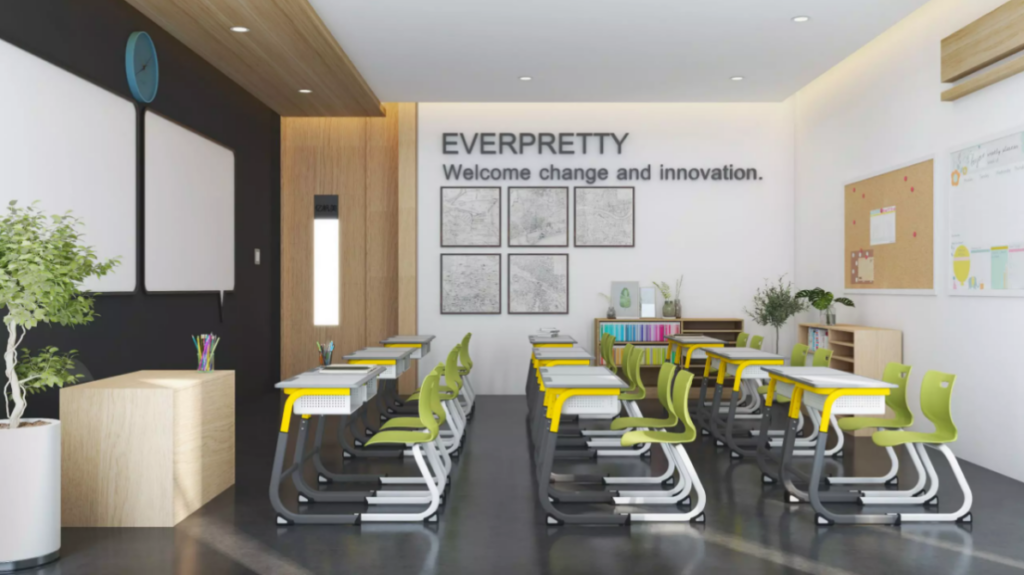
ADA-Compliant School Desk Height and Inclusivity Requirements
For government projects and international school contractors, compliance with the Americans with Disabilities Act (ADA) is also necessary. Creating an inclusive environment ensures that students using wheelchairs have the same access to learning as their peers.
To meet ADA standards, the school desk height must fall between 28 inches and 34 inches. However, height is only one factor. Contractors must also ensure:
- Knee Clearance: There must be at least 27 inches of vertical space under the desk.
- Horizontal Width: A minimum width of 30 inches is required to accommodate wheelchair entry.
- Depth: At least 19 inches of depth is necessary for leg and footrest clearance.
- Toe Clearance: A minimum of 9 inches of vertical space from the floor is required.
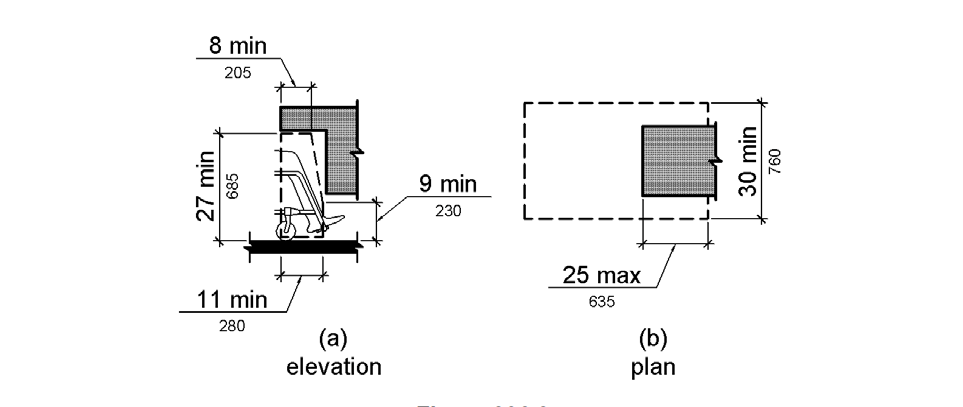
Picture from: https://www.ada.gov/assets/pdfs/2010-design-standards.pdf
Current 2026 guidelines suggest that at least 5% of all workstations in a classroom should be ADA-compliant and distributed throughout the room rather than clustered in one area. This encourages social integration and accessibility for all students.
Flexible School Desk and Chair Solutions
Modern classrooms are shifting away from rigid, static layouts toward student-centered environments. For project managers, selecting flexible furniture is the best way to future-proof a campus.
- Adjustable Desks
Height-adjustable desks are the ultimate solution for the varying growth rates within a single grade. These units allow for a “one-size-fits-all” approach to procurement while maintaining a custom ergonomic desk and chair height for every individual student.
Furthermore, sit-stand desks are increasingly popular in 2026, as they reduce sedentary fatigue, improve circulation, and help students maintain higher energy levels throughout the school day.
- Dynamic Seating Options
Dynamic seating, such as wobble stools or balance ball chairs, allows for “micro-movements” (rocking, tilting, or swiveling). For educational institutions, this is a strategic choice: these movements help students—particularly those with ADHD—expend excess energy and improve focus.
These chairs often feature casters or lightweight frames, allowing contractors to design layouts that can be reconfigured for group collaboration in seconds.
Choose the Right School Furniture Manufacturer
When sourcing furniture that meets these rigorous 2026 standards, choosing a partner with proven manufacturing strength and years of industry experience makes all the difference.
EVERPRETTY Furniture may catch your eye with over 30 years of specialized experience in the education sector, having served more than 71,520 clients across 68 countries. Their manufacturing capabilities and commitment to quality are backed by a massive 79,100-square-meter production base and international certifications, including ISO, SGS, TUV, and BV.
Furthermore, the company provides more than just furniture; they provide end-to-end project management:
- Free Consultation & 3D Design: They offer classroom layout planning and 3D modeling to help visualize the space before production begins.
- Customization (OEM/ODM): Whether you need specific dimensions for a STEM lab or branded colors for an international school, their solutions are 100% customizable.
- Global Logistics: With expertise in EXW, FOB, CIF, and DDP terms, they manage the complexities of international shipping and provide professional installation guidance.
Recap
Ensuring the proper school desk and chair height is a long-term investment in student health and academic success. By combining the 2026 height guidelines with EVERPRETTY Furniture’s high-quality, ergonomic designs, educational institutions can create spaces where every student thrives. For your next campus construction or classroom upgrade, trust the experts who prioritize ergonomics and durability!
