
Polyethylene (PE) and polyvinyl chloride (PVC) are two leading materials in pipe manufacturing. PE pipes are known for their flexibility and chemical resistance, which makes them a preferred choice for water, gas, and drainage systems. On the other hand, PVC pipes are rigid and durable, commonly used in plumbing and electrical conduit systems.
This article is a comprehensive PE vs. PVC pipe guide, discussing the characteristics, applications, and recommended extrusion machines for both pipe types.
PE vs. PVC Pipe: What is PE Pipe (Polyethylene)?
Polyethylene (PE) pipes are made from polyethylene, a versatile thermoplastic polymer derived from ethylene, which comes from natural gas or petroleum. Thanks to their flexibility, durability, and chemical resistance, PE pipes have become an essential material in modern piping systems.
One of the key advantages of PE pipes is their ability to perform reliably across a wide temperature range, making them suitable for both outdoor and underground installations. They are widely used in water supply, natural gas distribution, and drainage systems due to their long service life and low maintenance needs.
Their flexibility also supports trenchless installation methods—such as directional drilling—which help reduce excavation, shorten project duration, and lower overall construction costs. In addition, the lightweight nature of PE simplifies transportation and handling, further improving installation efficiency.
PE’s resistance to a wide range of chemicals makes these pipes ideal for industrial and agricultural environments where exposure to corrosive substances is common. Among PE materials, high-density polyethylene (HDPE) stands out for its higher strength and rigidity, making it particularly suitable for high-pressure applications such as municipal water mains and gas pipelines.
Overall, PE pipes offer an excellent combination of flexibility, chemical stability, and cost efficiency, making them a reliable and sustainable solution for diverse piping needs.
PVC vs. PE Pipe: What is PVC Pipe (Polyvinyl Chloride)?
PVC (Polyvinyl Chloride) is a synthetic polymer created by polymerizing vinyl chloride monomers. Known for its toughness and resistance to corrosion, PVC pipes are widely used in infrastructure and industrial systems that require durable, low-maintenance piping solutions.
In plumbing and construction, PVC pipes serve as dependable components for water distribution, drainage, and sewage systems. Their non-reactive surface prevents rust and buildup, helping to maintain clean water flow over long periods. In electrical installations, PVC is equally valued for its insulating properties, which help safeguard wiring from moisture and electrical interference.
Another major advantage of PVC pipes lies in their light weight and installation efficiency. They can be easily transported and connected without heavy machinery, making them suitable for both large-scale projects and home use. The smooth pipe walls also promote steady fluid movement, improving system performance and minimizing maintenance needs.
Despite these benefits, PVC is relatively rigid and can fracture under significant bending or extreme temperature shifts. To address such challenges, improved versions have been developed. For example, uPVC (unplasticized PVC) offers greater mechanical strength and rigidity, while CPVC (chlorinated PVC) significantly enhances heat resistance, making it suitable for hot water systems.
In summary, PVC pipes combine strength, reliability, and affordability, making them an essential material in modern plumbing, electrical, and industrial applications.
PE vs. PVC Pipe: A Comparative Analysis of Properties
Here is a PE vs. PVC pipe table discussing the key factors:
| Property | PE Pipe | PVC Pipe |
| Flexibility | Highly flexible, bends easily | Rigid, limited flexibility |
| Chemical Resistance | Excellent resistance to most chemicals | Good resistance, but generally not as strong as PE |
| Durability | High resistance to cracking and impact | Durable but can crack under high pressure or cold temperatures |
| Temperature Tolerance | Handles low temperatures well (-70°C to 60°C) | Handles high temperatures better, but less suitable for cold environments |
| Installation | Easier to install due to flexibility, fewer joints required | Requires more fittings for installation |
| Pressure Rating | Excellent working pressure rating, especially for high flow rates and surge resistance (water hammer) | Higher pressure class for static water, but reduced working pressure at high flow rates |
| Cost | Generally higher initial cost | Generally lower upfront cost |
Pipe Extruder Machine Recommendation
High-quality pipe production starts with the right extrusion system, and Dekuma provides specialized extruders engineered to match the performance requirements of both PE and PVC materials.
- High-Performance Single-Screw Extruder for PE Pipe Manufacturing
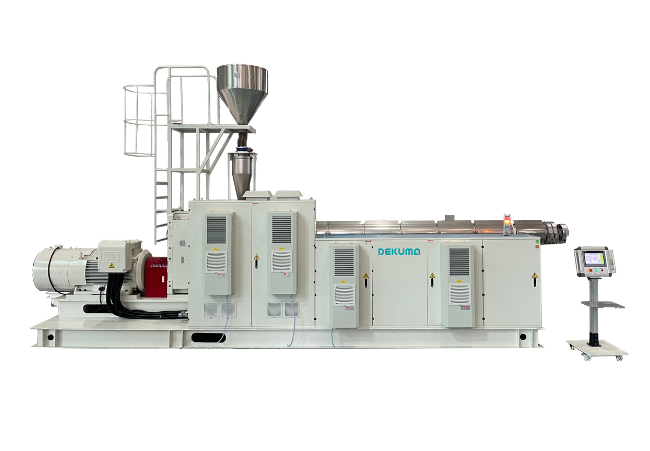
The high-performance single-screw extruder is ideal for PE pipe production. It delivers consistent melt flow, stable output, and excellent material homogeneity. With screw diameters ranging from 45 to 150 mm and advanced Siemens or B&R control systems, it supports intelligent automation and real-time monitoring. Its energy-efficient motor, high-wear-resistant barrel, and gravimetric dosing system ensure accurate output and reduced material waste.
- Conical or Parallel Twin-Screw Extruder for PVC Pipe Manufacturing
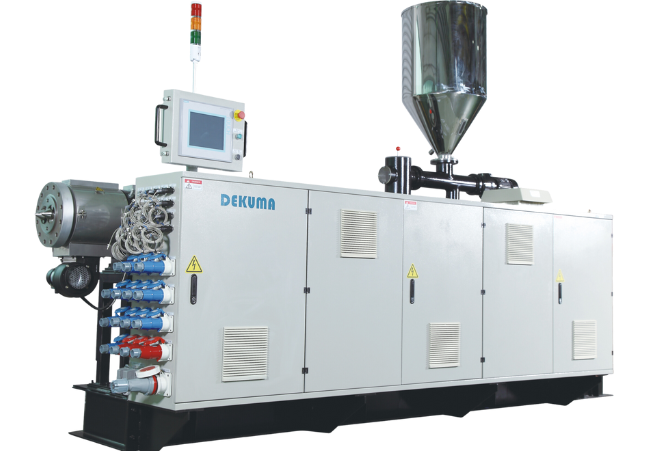
For PVC pipe manufacturing, Dekuma provides conical and parallel twin-screw extruders. The parallel DKM-EII model offers strong torque, uniform plasticization, and precise temperature control, which is perfect for PVC-U, PVC-M, and PVC-C formulations. On the other hand, the conical model enhances extrusion stability and output efficiency for rigid PVC powders. Both systems integrate intelligent controls, efficient venting, and robust construction for long service life and superior pipe quality.
Wrapping Up
Both PE and PVC pipes play vital roles in modern infrastructure, but their performance relies heavily on the precision of the extrusion process. Dekuma stands as a trusted name in this field, offering advanced solutions that balance innovation with reliability. Its single-screw extruders ensure consistent results for PE pipes, while its twin-screw systems deliver excellent melt quality and control for PVC pipes.
For more information, it is highly recommended to consult their professional team here.
