
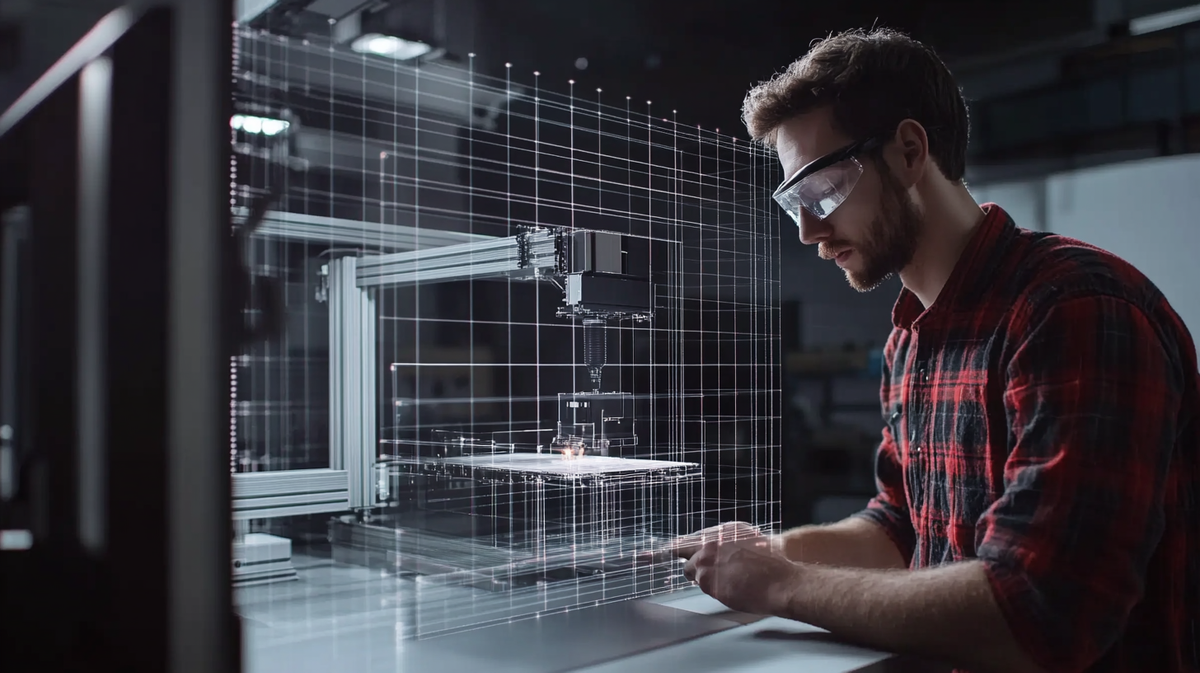
In the rapidly evolving landscape of modern manufacturing, the integration of advanced technologies is crucial for maintaining competitiveness and efficiency. Among these technologies, vision systems have emerged as a pivotal component, transforming the way manufacturers approach quality control and automation. These systems, which utilize cameras and image processing software, are designed to mimic human vision, enabling machines to “see” and interpret their surroundings. This capability not only enhances the precision and speed of manufacturing processes but also significantly reduces the likelihood of human error. As industries strive to meet the increasing demands for high-quality products and faster production times, vision systems are becoming indispensable tools in the manufacturing sector.
Industrial Vision Systems: Enhancing Quality Control
Industrial vision systems play a critical role in enhancing quality control within manufacturing environments. By employing high-resolution cameras and sophisticated image processing algorithms, these systems can inspect products with a level of detail and accuracy that surpasses human capabilities. This is particularly important in industries where precision is paramount, such as electronics, automotive, and pharmaceuticals. Vision systems can detect defects, measure dimensions, and verify the presence of components, ensuring that only products meeting stringent quality standards proceed to the next stage of production.
One of the key advantages of using vision systems for quality control is their ability to operate continuously and consistently without fatigue. Unlike human inspectors, who may become tired or distracted, vision systems maintain a constant level of performance, leading to more reliable and repeatable results. This consistency is crucial for maintaining high levels of product quality and minimizing waste. Furthermore, the data collected by vision systems can be used to identify trends and patterns in production, enabling manufacturers to implement proactive measures to address potential issues before they escalate.
For more information on how vision systems are utilized in manufacturing, visit https://etisoft.eu/pc/vision-systems/.
Automation in Modern Manufacturing
In addition to enhancing quality control, vision systems are integral to the automation of manufacturing processes. Automation involves the use of technology to perform tasks with minimal human intervention, and vision systems are a key enabler of this transformation. By providing machines with the ability to “see” and interpret visual information, vision systems allow for more complex and flexible automation solutions.
For instance, in assembly lines, vision systems can guide robotic arms to precisely position components, ensuring accurate assembly without the need for manual adjustments. This not only speeds up production but also reduces the risk of errors that could lead to costly rework or product recalls. Moreover, vision systems can adapt to changes in product design or variations in the manufacturing process, providing manufacturers with the flexibility to quickly respond to market demands.
The integration of vision systems into automated manufacturing processes also facilitates real-time monitoring and control. By continuously capturing and analyzing visual data, these systems can detect anomalies or deviations from the expected process, triggering immediate corrective actions. This capability is essential for maintaining optimal production efficiency and minimizing downtime.
The Future of Vision Systems in Manufacturing
As technology continues to advance, the capabilities of vision systems in manufacturing are expected to expand even further. Emerging technologies such as artificial intelligence (AI) and machine learning are being integrated with vision systems to enhance their functionality and decision-making capabilities. AI-powered vision systems can learn from data, improving their accuracy and adaptability over time. This opens up new possibilities for predictive maintenance, where vision systems can anticipate equipment failures before they occur, reducing unplanned downtime and maintenance costs.
Additionally, the development of 3D vision systems is set to revolutionize manufacturing by providing machines with a more comprehensive understanding of their environment. These systems can capture depth information, enabling more accurate object recognition and manipulation. This is particularly beneficial in applications such as bin picking, where robots need to identify and grasp objects from a pile.
In conclusion, vision systems are transforming the manufacturing industry by enhancing quality control and enabling advanced automation. As these systems continue to evolve, they will play an increasingly vital role in driving efficiency, productivity, and innovation in manufacturing processes.